With CuRE, foundations, registries, sites, sponsors and contract research organizations work on one platform with a shared data layer. Consent, agreements and data carry from one study to the next
Disease foundations
Count eligible patients across forty centers without collecting a record
A sponsor's criteria run inside each center's own records under that center's rules. Only a privacy-protected total comes back
CuRE keeps a foundation's registry, its center network and the record of what each patient agreed to in one place that carries from study to study. Each new study starts with patients already enrolled, data already collected and center agreements already in place, so more of each grant goes to the research itself
Purpose limits checked on every release, so a market-access request against a research-only agreement is refused Conduct
Eligible-patient counts across your centers without collecting a record Commons
Withdrawal from one partner agreement without leaving the registry Control
Data access committee review where approval issues the access Conduct
Questionnaires by phone for patients who do not use an app Compass
Trial results returned to every participant in plain words Compass
Receive clean, harmonized copies of the data you contribute
CuRE returns each site's own patients' data, cleaned and harmonized, ready for a fellow's next study. Monitors verify source without an EHR login, and EHR labs arrive in the subject timeline, so site staff re-type less
Your own patients' data returned cleaned, with a trimmed codebook and the data-use terms attached Capture
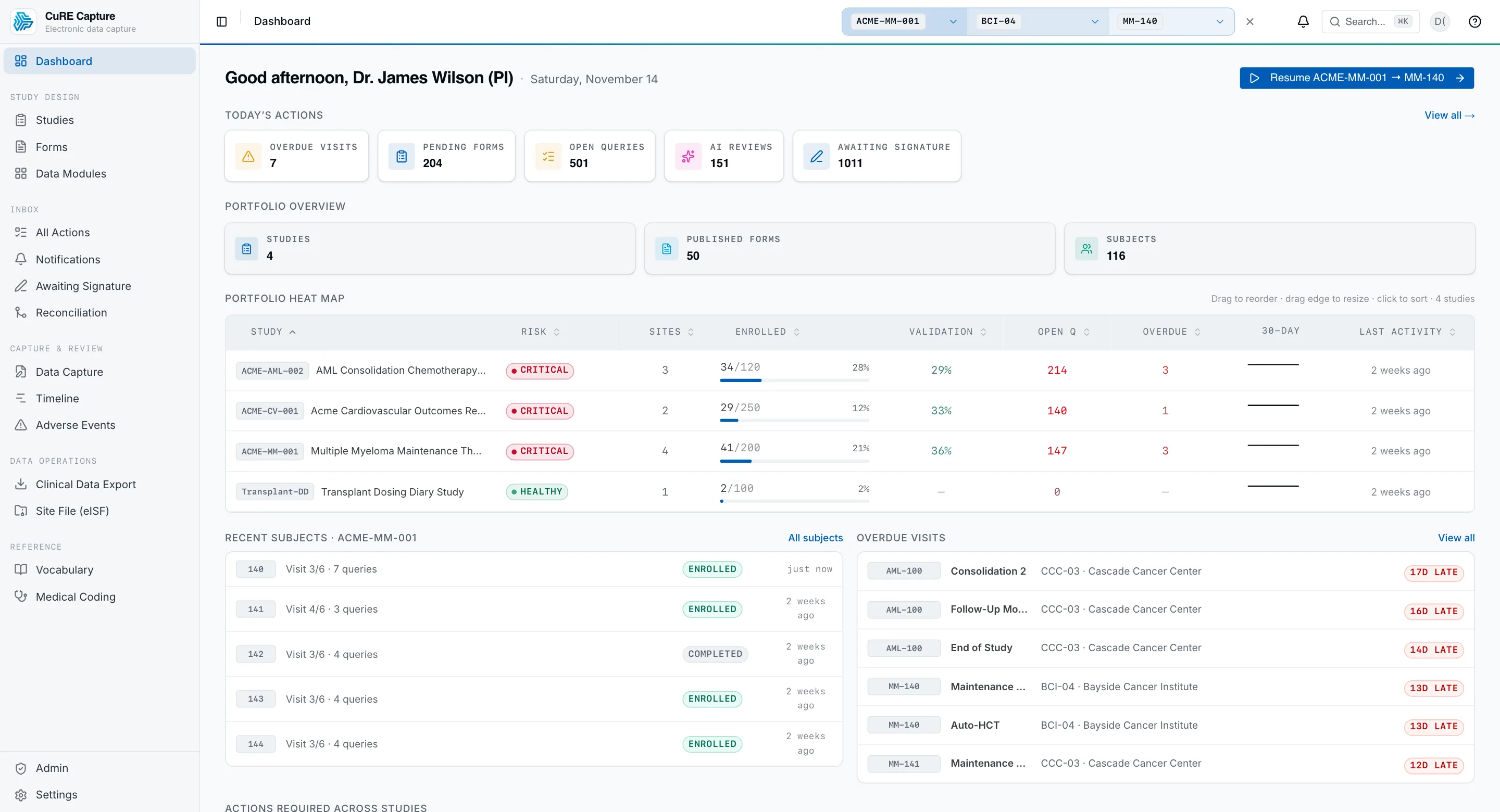
Source verification without giving the monitor an EHR login Capture
Labs from your EHR feed arrive in the subject timeline, marked with their source Capture
Questionnaires on paper or by phone, with print, scan, transcription and signature in one audit trail Compass
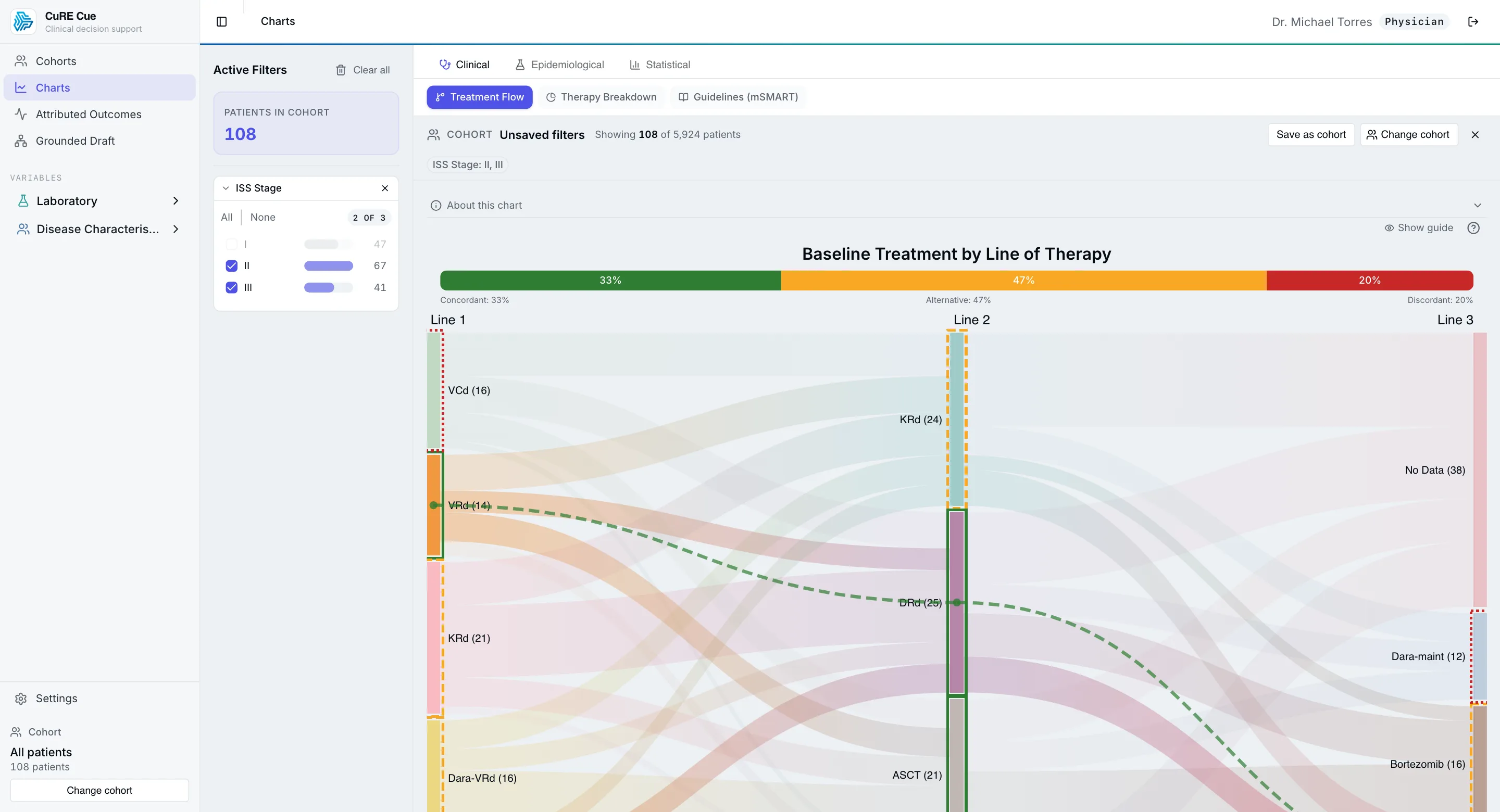
Trial matches designed to surface in the chart and land on the coordinator's screening list Cue
Federated counts that answer a sponsor without moving your records Commons
CuRE keeps the cellular product, its manufacturing history, the cold chain and fifteen years of follow-up on the patient's record. A recall, a safety question or a manufacturing variable becomes a query
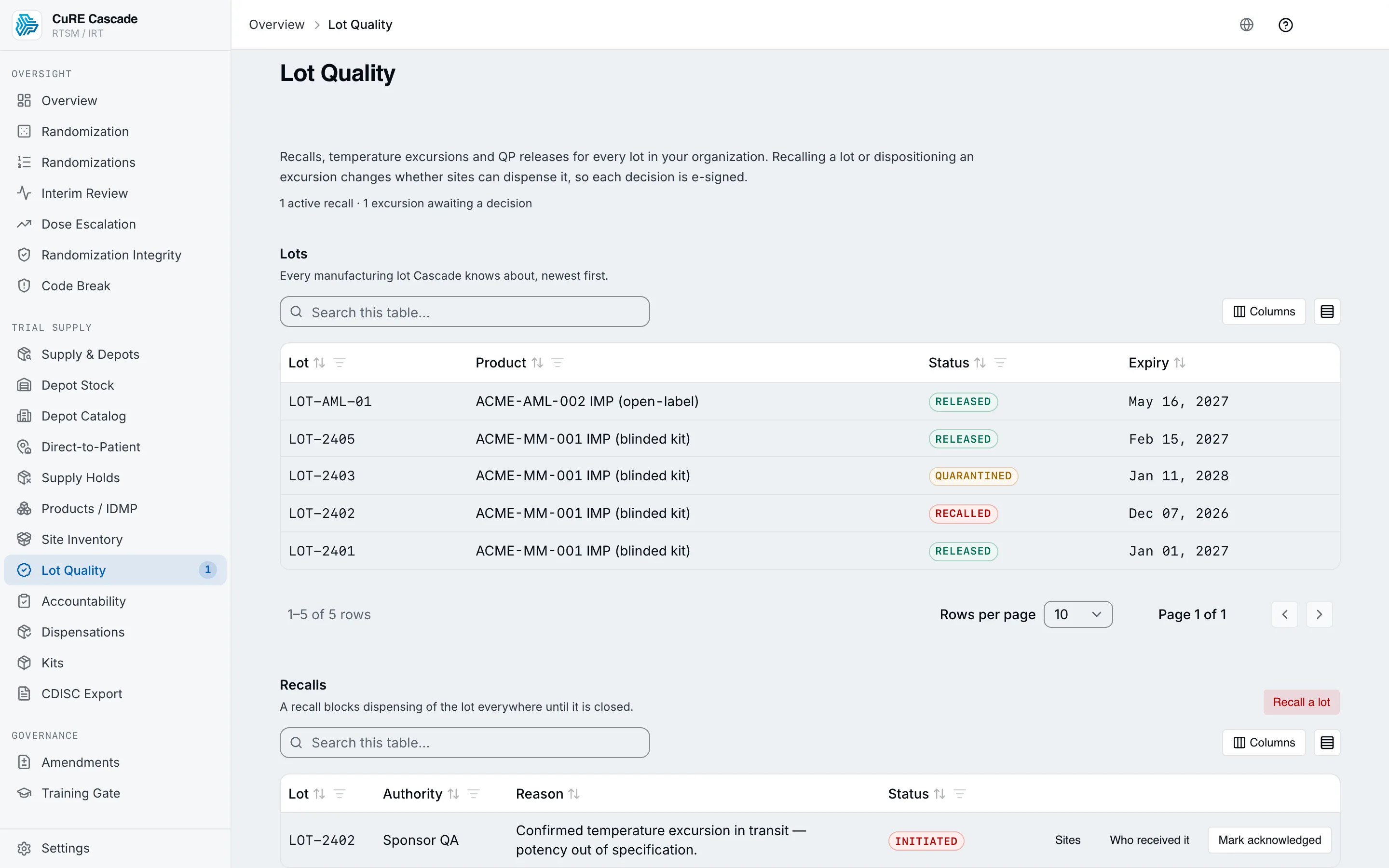
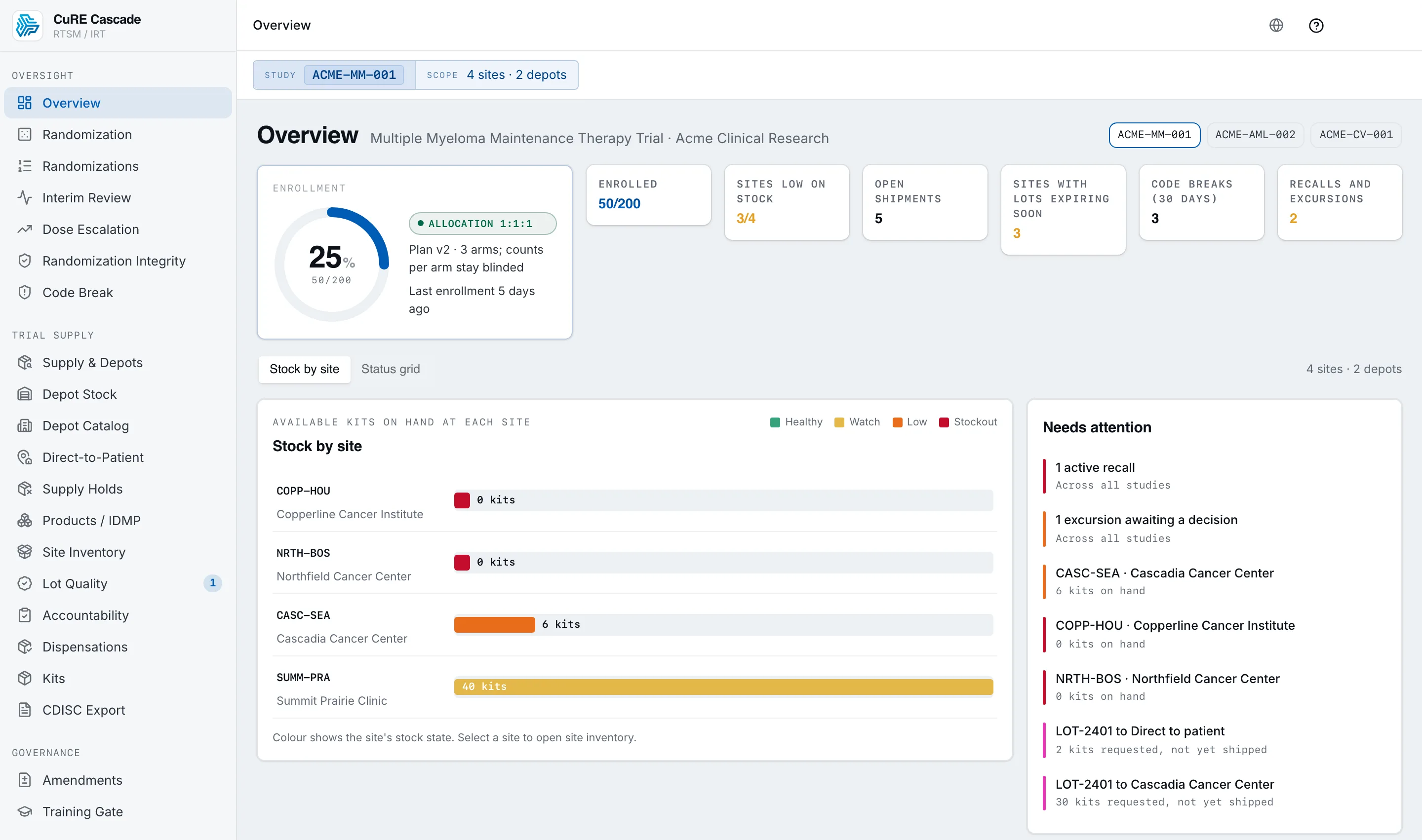
Recall a lot and see every subject who received it, at every site, with stock quarantined Cascade
Breaking the blind for one patient starts the safety reporting clock on that case Canary
Long-term follow-up laid out from the dosing date Compass
The cellular product, its lot genealogy and the donor modeled as structured records Conduct
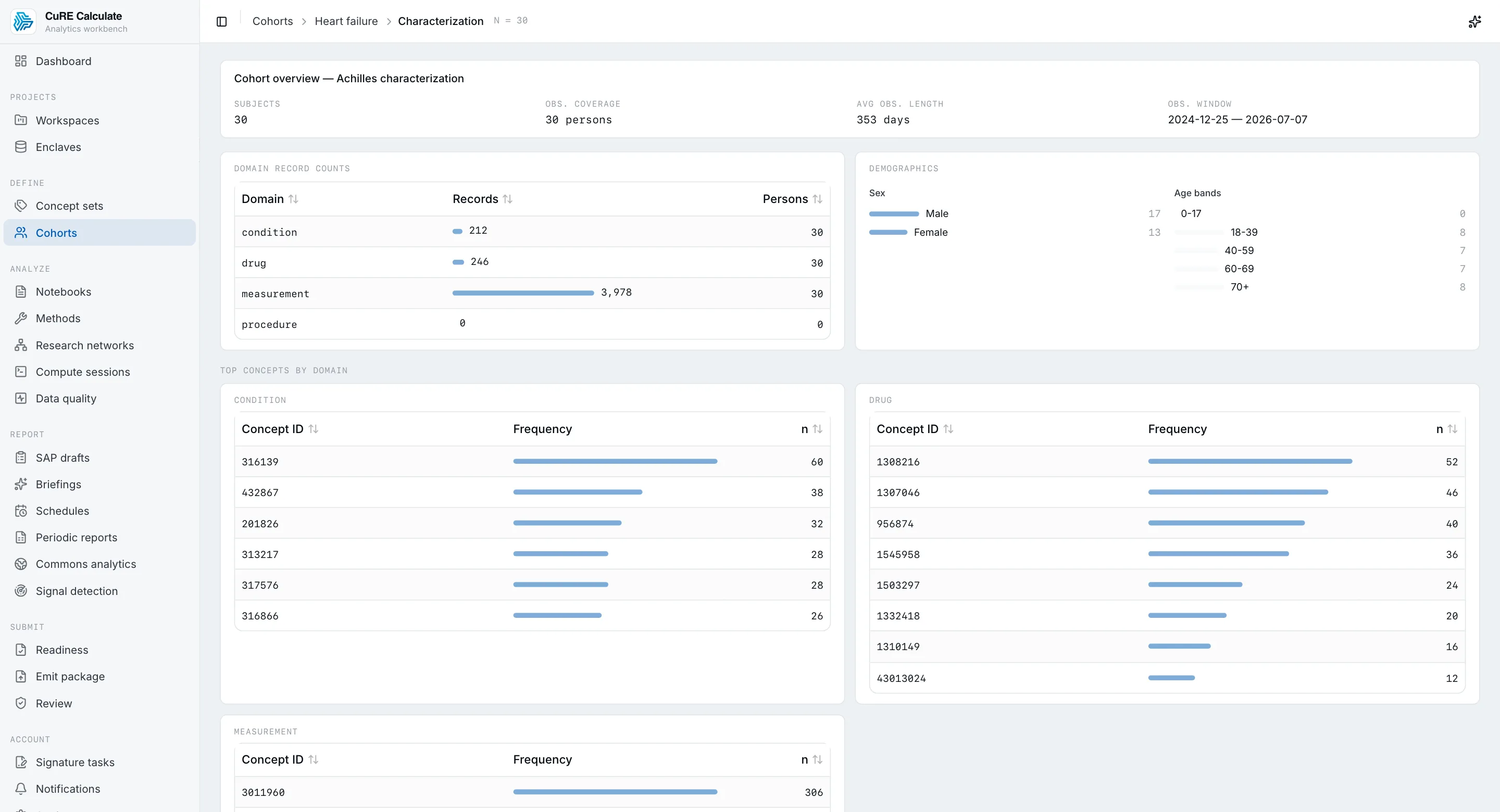
Manufacturing and cold-chain variables designed to sit beside outcomes as cohort criteria Calculate
Small-population randomization with every draw pinned to the plan version in force Cascade
Decision support built from your own patients' records
CuRE brings similar-patient cohorts and trial matches into the EHR, built from the health system's own records. The records stay in place. Data the health system contributes to research comes back cleaned and harmonized
Similar-patient cohorts from your own records, in the EHR sidebar Cue
Trial matches designed to appear in the chart, with Refer sending the patient to screening Cue
Your own patients' data returned cleaned and harmonized Capture
Patient questionnaires by app, by phone or on paper Compass
Federated counts that answer a sponsor without your records leaving Commons
Standards-based connection to your EHR through FHIR Conduit
CuRE treats the CRO as an organization in its own right and keeps each sponsor's data isolated. Across those sponsors it flags duplicate subjects and gives the CRO one portfolio view
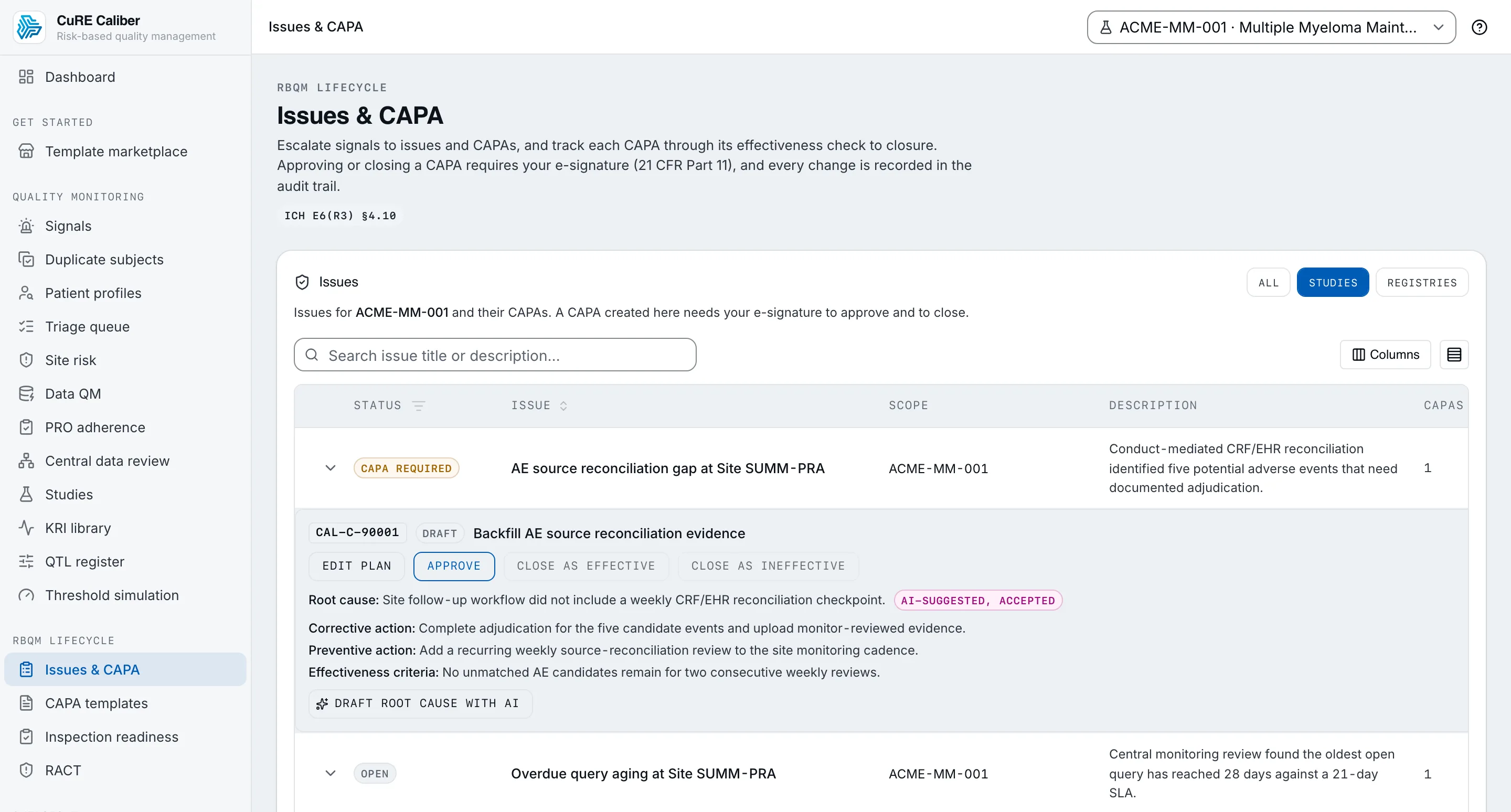
Duplicate-subject signals across sponsors' studies from privacy-preserving identity matching Caliber
Adverse events the EHR saw with no matching CRF record, flagged site by site Caliber
One portfolio across every sponsor, each read under its own tenant and logged Control
Randomization amendments as reviewed, signed diffs, with earlier draws pinned to their version Cascade
Risk thresholds set against de-identified comparator studies as the comparator pool grows Caliber
Remote inspection access that expires, with every answer citing a document or refusing Compend
Every site's enrollment, visits and supply as they happen
CuRE runs data capture, randomization and supply, patient-reported outcomes and study operations on one platform. A randomization, a missed visit or a shipment appears in the study dashboard as it happens
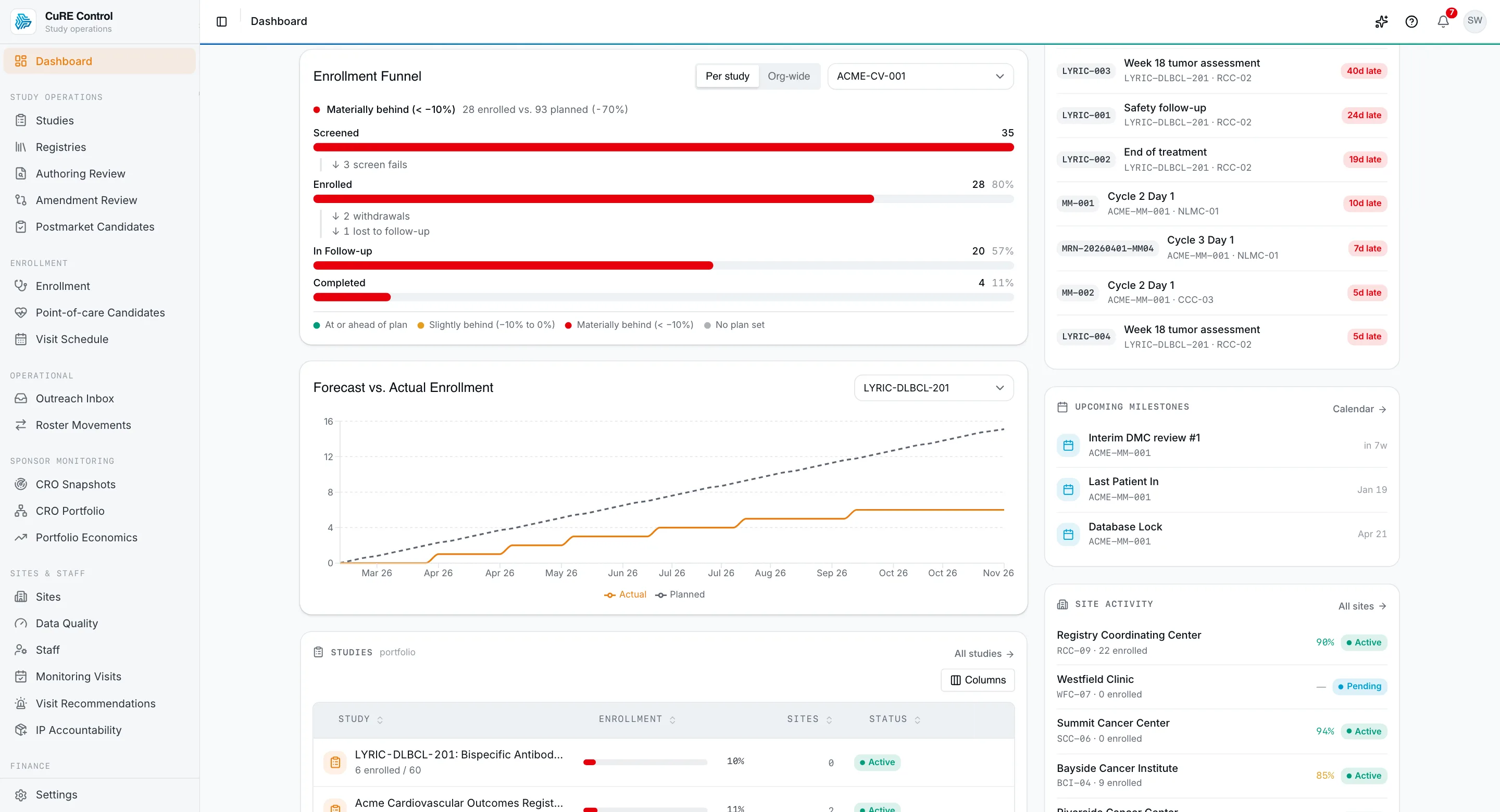
Enrollment funnel, forecast against actual enrollment, overdue visits and milestones in one dashboard Control
Block, stratified, minimization or biased-coin randomization, with supply inventory, shipments, expiry and resupply rules Cascade
Electronic data capture with edit checks at entry Capture
eConsent, patient-reported outcomes and dosing diaries on the participant's own device Compass
One study design behind the forms, randomization and milestones, so an amendment is made once Control
Two-way connectors from randomization and supply to an EDC or eCOA system already in use Cascade
The standards library and the study build are the same governed object, so a design change propagates to every artifact
Real-World Evidence
Consent and agreement terms enforced on the OMOP tables
CuRE enforces consent, agreement terms and withdrawals in the database, on the standard OMOP tables. Analysts keep working in ATLAS, notebooks and dashboards
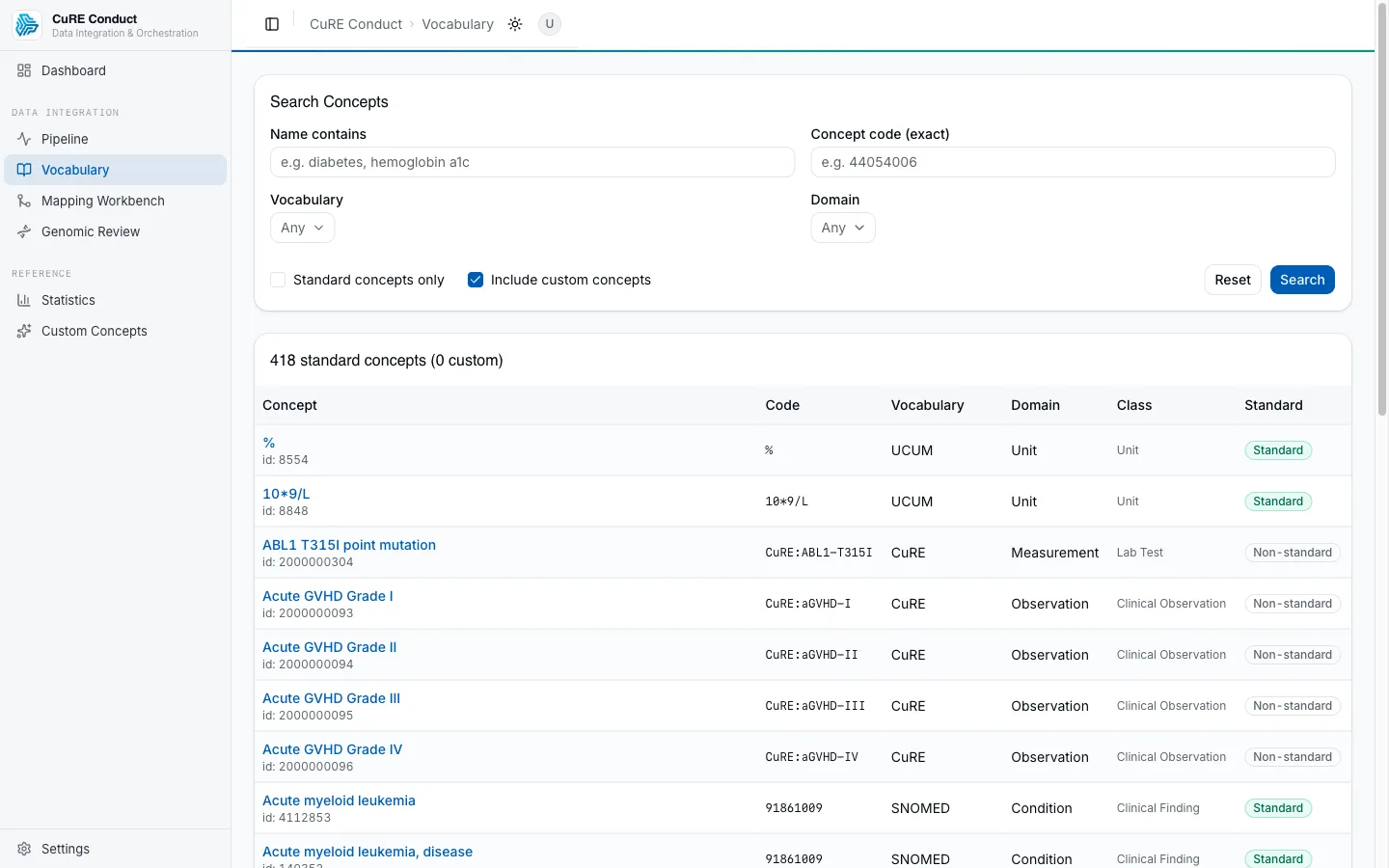
Consent withdrawal and agreement terms enforced in the database on the standard OMOP tables Conduct
Federated counts that spend a privacy budget and say when a site is missing Calculate
Sponsor agreements that show how many patients consent blocks, live Control
Cohort definitions imported from ATLAS that keep their identity on re-import Calculate
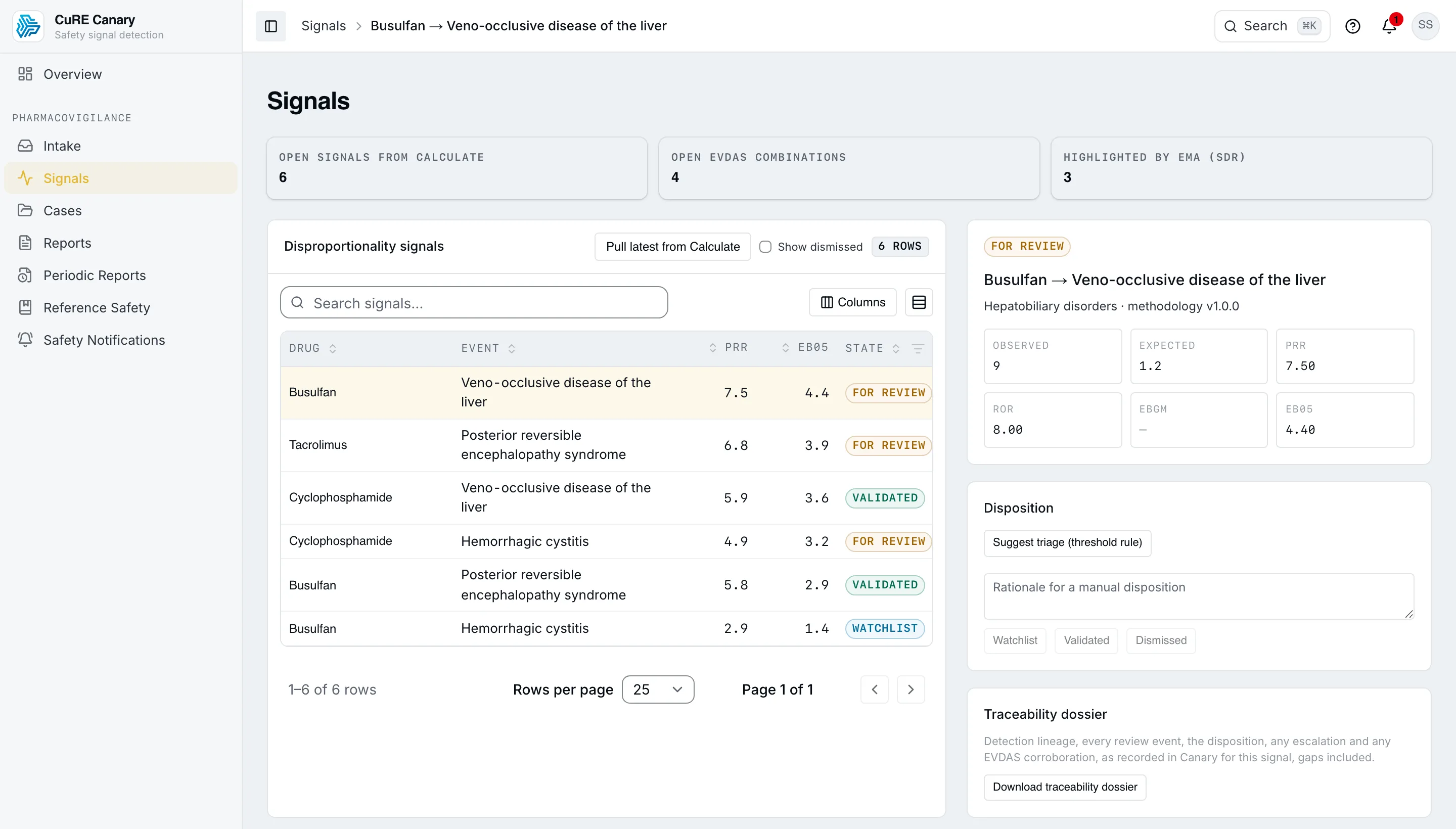
OMOP-native signal detection with PRR, ROR and EB05 Canary
Risk monitoring that compares what the EHR saw with what the CRF recorded Caliber
Connectors for EHR, claims, EDC and lab data, with analyses designed to run inside your Databricks or Snowflake account
Analysis-ready datasets, designed to build from one approved study specification Conduct
A governed semantic layer of versioned value sets and operational definitions Calculate
Healthcare resource use and vaccine-exposure measures derived over OMOP Conduct
Each registry, foundation and health system that joins adds records you can count under its own rules, without a new data-sharing negotiation for every question
CuRE keeps registrations, eCTD sequences and labels on the same platform as the analyses behind them. Every number in a clinical study report can be checked against the analysis that produced it
Every number in a clinical study report checked against the analysis and marked Match, Mismatch or Unverified Consign
eCTD sequence assembly and validation for ICH, FDA, EMA, PMDA and Health Canada Consign
Registration lifecycle and health-authority interaction tracking Consulate
Local labels that lag the core data sheet, and by how many days Cachet
Clinical-trial disclosure workflows for CT.gov and EU CTIS Consulate
TMF-grounded authoring scaffolding for the CSR and reviewer guides Compend
CuRE opens each safety case from the adverse event as the site recorded it, so nothing is re-keyed between the study database and the safety system. Cases, signal detection and the study data share one platform and one audit trail
Safety cases opened from the adverse event recorded in the study, with the suspect product and reaction carried across Canary
E2B(R3) ICSRs, follow-ups, amendments and nullifications, with second-reviewer signatures bound to the exact report content Canary
An emergency code break in randomization is linked to its safety case for expedited reporting Canary
Disproportionality signal detection (PRR, ROR and EB05) run directly on OMOP data Canary
EVDAS eRMR reviews tracked alongside signals from study data Canary
MedDRA coding, with AI-drafted narratives for cases and for aggregate reports such as the DSUR and PBRER Canary
Most research software attempts to automate the handoffs between systems. CuRE removes those handoffs entirely through integration
Answer cross-system questions with one query
Is this subject enrolled in another sponsor's trial? How many eligible patients are there across forty centers? Did the cold chain affect the outcome? Each is one query on the shared data layer
Data mapped and entered once
Data maps to OMOP once and every app reads the same data. Next month's CRO file is recognized and replays in one click. A value is entered once and never re-keyed into another system
Start from data that is already there
A new study, a sponsor's feasibility question or a fresh safety signal starts from data already on the platform. No new extract is needed
The audit trail writes itself
Signatures are bound to the exact content they approved, every AI suggestion is sealed with the model that made it, and a CAPA can close on the metric it was meant to fix. Inspection evidence is produced as the work is done
One platform replaces the vendor stack
Randomization, safety, quality, TMF and analytics share one data model. Adding a capability means switching it on, with no new integration to build and validate
Services
Principia's team has designed health science data systems and research networks for many years. Engagements can begin with strategy, design or planning work, before or alongside a CuRE license. The engagements below are examples, and Principia takes on other advisory and custom development work as well
Registry & Research Network Design
Design multi-stakeholder registry ecosystems: governance, data flows, sustainability models and the value exchange that keeps member sites contributing
OMOP & Standards Strategy
Plan OMOP-native migrations and CDISC adoption: vocabulary governance, CDASH-to-SDTM traceability, and submission-readiness designed in from the data model up
System Architecture & Modernization
Architect scalable, standards-based research infrastructure and plan the migration off legacy systems
Study & RWD Strategy
Design studies on integrated real-world data: feasibility, protocol design and evidence planning grounded in the data you already hold
Custom Development
Build the integrations, workflows and analyses an organization needs beyond the standard platform, on the same data layer as the rest of CuRE